
What's New
New to come
While our current systems have largely implemented IoT Sensors to better capture and compute data based on relevant trends, the rise of new technologies in recent years including LLMs (Large Language Models), cloud computing, AI-powered analytics and IoT Sensors, reshape how facilities are monitored, managed and optimised.
What used to be once heavily dependent on manual inspections and reactive responses can now move towards becoming an increasingly autonomous ecosystem that moves beyond traditional reactive workflows into proactive and data-driven operations.
The Objective
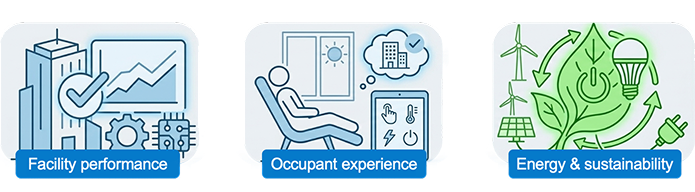
EF Software seeks to leverage agentic AI to predict issues, orchestrate intelligent actions, and enable autonomous operations that continuously optimise through performance, experience and sustainability.
AI Pipeline
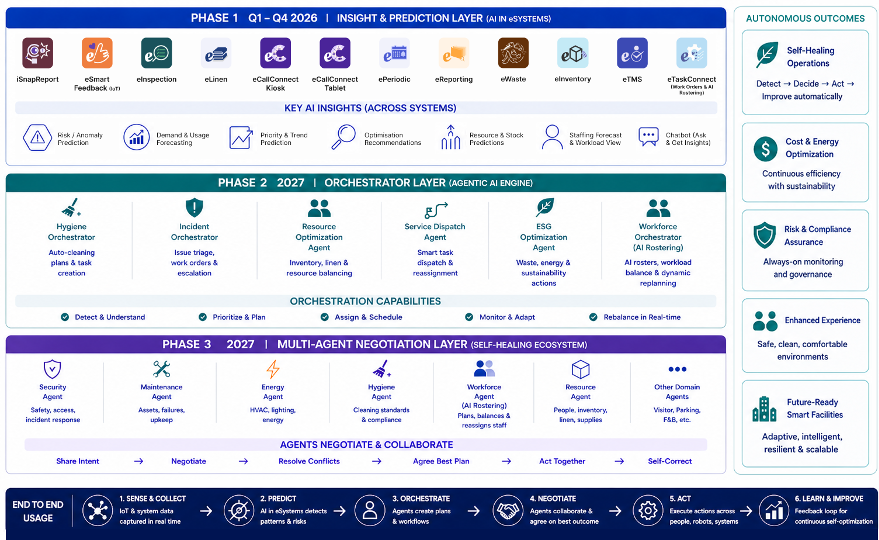
Designed around a layered intelligence architecture that progressively transforms traditional facility management systems into a fully connected and autonomous operational platform. Rather than introducing AI as a standalone feature, we at EF Software intend to integrate AI capabilities across the entire eSFMS (eSmart Facility Management Systems) ecosystem — enabling every module to contribute data, insights, and automated actions into a unified operational intelligence layer.
Below shows an overview of the pipeline with its multiple layers and phases, including the Insight & Prediction Layer, Orchestra Layer and the Multi-Agent Negotiation Layer.
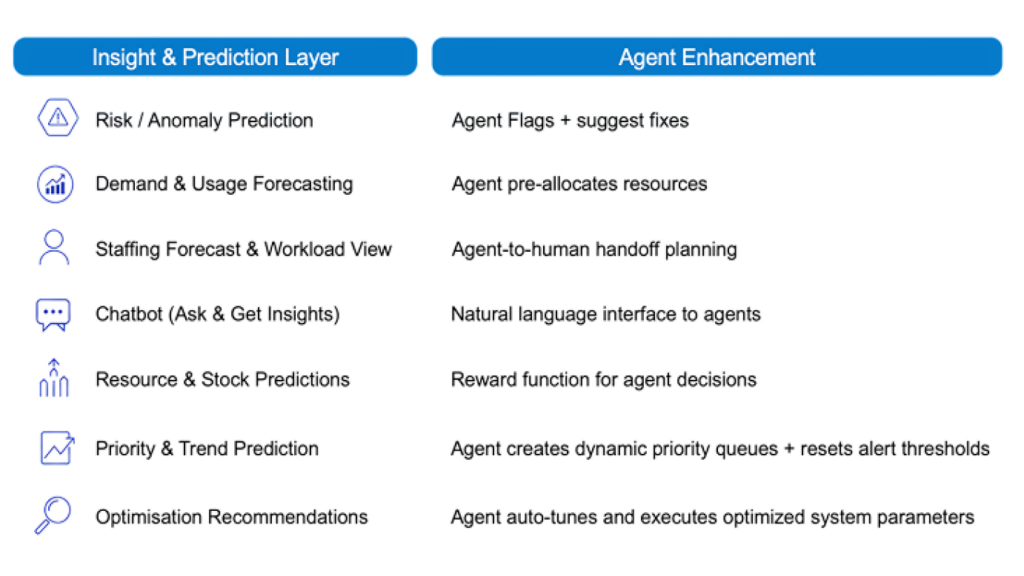
Phase 1 — Insight & Prediction Layer. The first phase focuses on operational visibility, predictive analytics, and intelligent insights generation. At this stage, the platform continuously collects and analyzes operational data across all facility workflows to help organisations move from reactive operations to proactive management.
Artificial Intelligence models analyse patterns from examples such as:
- IoT sensors
- Human traffic
- User feedback
- Inspection records
- Work order history
- Inventory movement
The platform begins identifying trends, anomalies, and operational risks before issues occur.
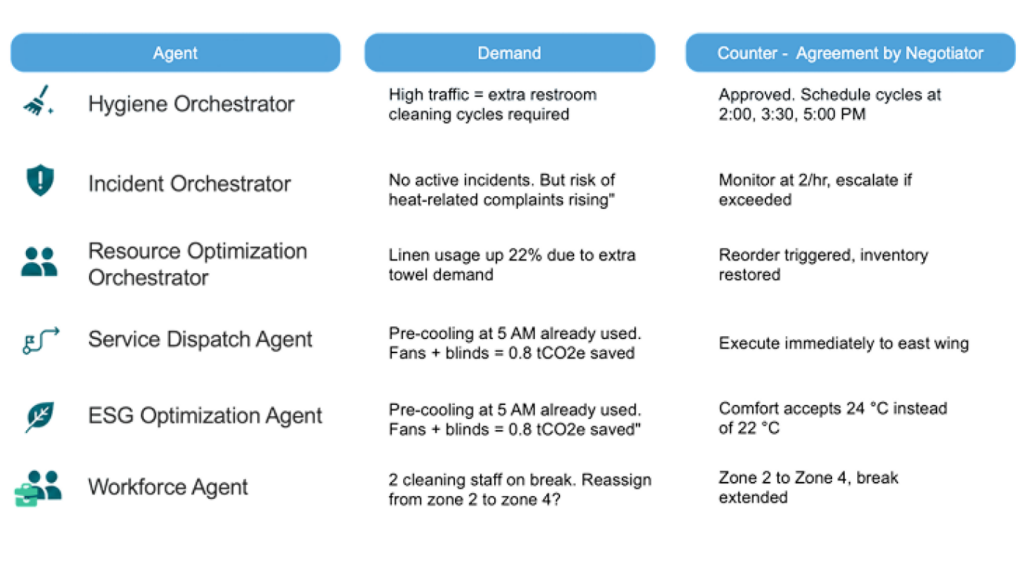
Phase 2 — Orchestrator Layer. The second phase introduces the AI Orchestrator Layer — the central coordination and negotiation hub of the eSFMS ecosystem. At this stage, AI no longer only predicts problems; it begins coordinating and orchestrating workflows across multiple systems automatically. The platform connects operational modules together and enables intelligent decision-making between systems, manpower resources, scheduling engines, and operational priorities.
Acting as a centralised operational brain, the Orchestrator layer is capable of: coordinating tasks across systems, negotiating priorities between workflows, allocating manpower dynamically, balancing operational workloads, optimising schedules in real-time and triggering automated workflows and escalations.
Some examples include:
- eSmart Feedback detecting hygiene risk and automatically adjusting cleaning schedules in ePeriodic
- iSnapReport automatically generating work orders in eTaskConnect
- eTMS manpower data influencing real-time task assignment
- eInventory automatically initiating replenishment workflows
- eCallConnect prioritising ICU bed cleaning ahead of general ward requests
- eWaste dynamically optimising waste collection schedules and routes
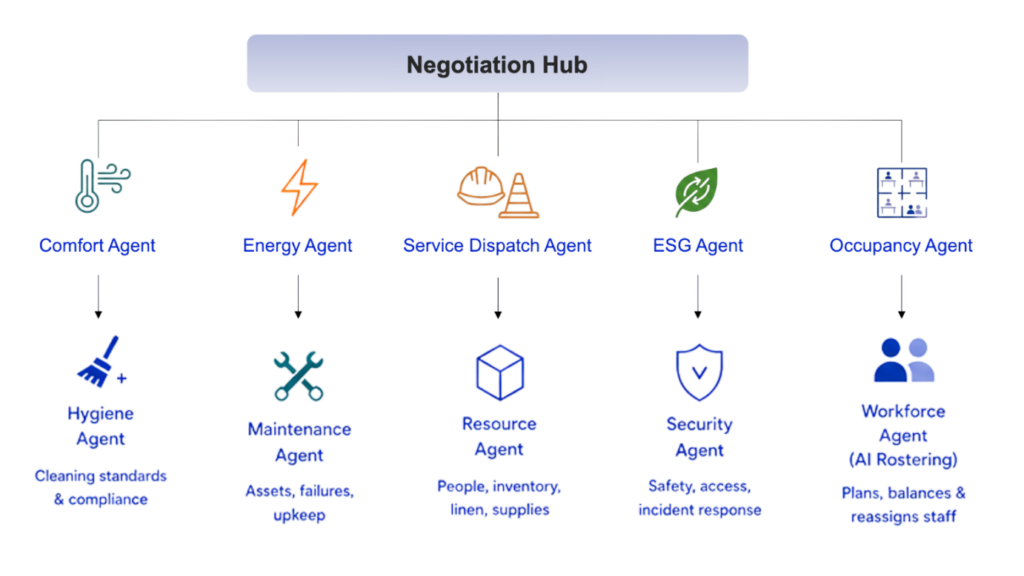
The orchestration layer also introduces AI Agents that specialize in different operational domains. These agents communicate through the Orchestrator Layer to negotiate operational priorities and coordinate execution across the facility environment.
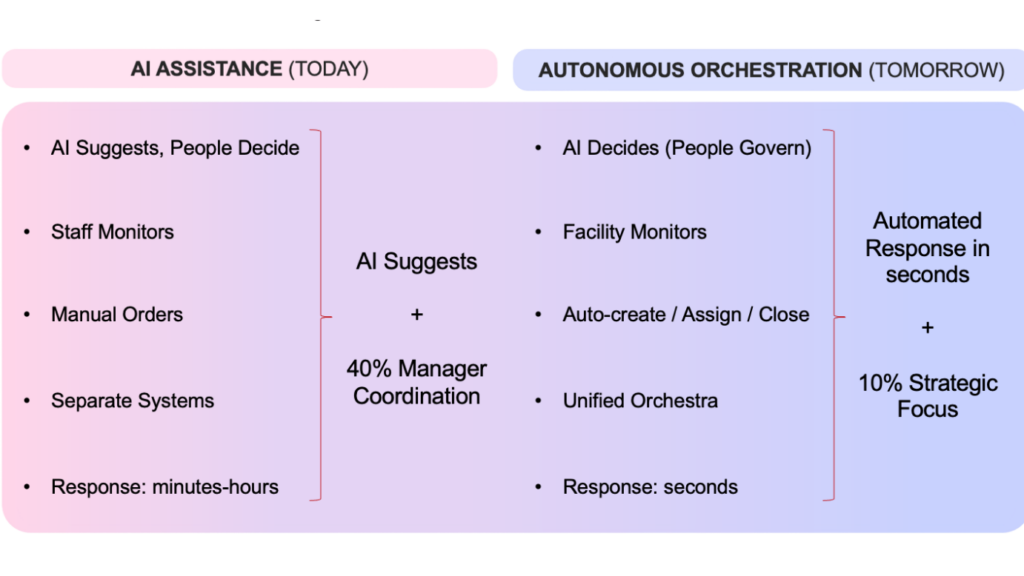
Phase 3 – Multi-Agent Negotiation & Autonomous Operations Layer. The final phase introduces a fully autonomous Multi-Agent Negotiation Layer where multiple AI agents continuously collaborate, negotiate, self-correct, and optimise operations across the entire organization.
At this stage, AI systems operate as an interconnected operational ecosystem capable of autonomous decision-making and self-healing operations. Each AI Agent continuously monitors, operational performance, workforce activity, system health, resource utilisation, SLA Compliance, facility risks, device connectivity and workflow anomalies. Over time, the platform continuously learns from historical operational outcomes and refines its prediction models, resource allocation strategies, scheduling behaviour, and workflow optimisation logic. What was once reactive firefighting can now become a predictive and autonomous response, allowing AI Agents to handle the automated creation, assignment and tracking of work orders.
